What makes Mount Kilimanjaro so Rare and Unique?
What makes Mount Kilimanjaro so Rare and Unique?
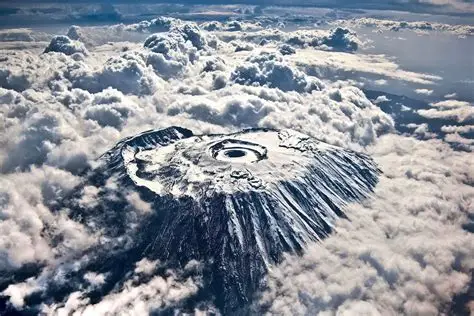
Mount Kilimanjaro is more than just Africa’s highest mountain it’s one of the world’s most extraordinary natural wonders. Rising 5,895 meters (19,341 feet) above sea level, Kilimanjaro stands as the tallest free-standing mountain on Earth, meaning it rises dramatically from the surrounding plains rather than being part of a mountain range. This incredible geological formation, combined with its ecological diversity, cultural importance, and accessibility, makes Kilimanjaro truly one of a kind.
This blog explores the rare qualities that set Mount Kilimanjaro apart from every other mountain in the world from its formation and landscape to its cultural and environmental significance.
1. A Free-Standing Giant
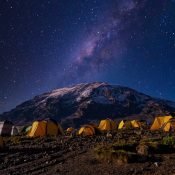
Unlike most of the world’s tallest peaks, which belong to mountain ranges formed by tectonic collisions, Kilimanjaro is a free-standing volcanic mountain. It was created millions of years ago by volcanic activity along the Great Rift Valley. The mountain actually consists of three distinct volcanic cones Kibo, Mawenzi, and Shira each telling its own story of eruption and erosion. Kibo, the highest cone, still shows signs of potential activity, adding to Kilimanjaro’s geological intrigue.
2. A Journey Through Five Climate Zones
One of Kilimanjaro’s most unique features is the chance to experience five different ecological zones in a single climb. As trekkers ascend, they pass through a dramatic series of landscapes from tropical rainforest to alpine desert, and finally, to the icy summit.
- Cultivation Zone (800–1,800 m): Lush farmland nourished by volcanic soil.
- Rainforest Zone (1,800–2,800 m): Dense jungle filled with monkeys, birds, and exotic plants.
- Moorland Zone (2,800–4,000 m): Open fields of heather and giant lobelias.
- Alpine Desert (4,000–5,000 m): Harsh, dry terrain with intense sun and cold nights.
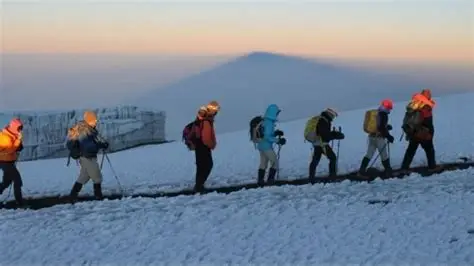
- Arctic Zone (above 5,000 m): Ice and snow crown the peak, creating a stunning contrast to the warm plains below.
Nowhere else in the world can trekkers walk from tropical forest to glaciers in just a few days — making Kilimanjaro an unmatched ecological experience.
3. The Vanishing Glaciers
Kilimanjaro’s snow-capped summit is one of its most iconic features, but it’s also one of its most fragile. Scientists have discovered that the mountain’s glaciers have been retreating rapidly due to climate change, losing more than 80% of their mass over the past century. These ancient ice fields are believed to be over 11,000 years old, and their disappearance tells a powerful story about global warming and environmental conservation.
This makes Kilimanjaro not only a destination for adventure but also a living symbol of climate change and the urgent need to protect our planet’s fragile ecosystems.
4. A Cultural and Spiritual Symbol
For local communities such as the Chagga people, who live on Kilimanjaro’s fertile lower slopes, the mountain is much more than a landmark it is sacred. They refer to it as the “Mountain of Greatness” (Kilema Kyaro) and believe it to be the home of ancestral spirits. Beyond its local meaning, Kilimanjaro also holds a global symbolic power representing freedom, endurance, and triumph. It has inspired explorers, poets, and climbers alike, becoming a universal symbol of human perseverance.
5. Accessibility Without Technical Climbing
Another rare aspect of Kilimanjaro is that it’s the highest peak in the world that can be climbed without technical mountaineering skills. Trekkers don’t need ropes, ice axes, or advanced climbing experience only good fitness, determination, and proper acclimatization. This accessibility allows thousands of people from all over the world to experience the thrill of reaching one of Earth’s highest points safely with professional guides.
6. A Haven for Biodiversity
Kilimanjaro National Park is a UNESCO World Heritage Site and home to incredible biodiversity. The lower slopes host elephants, buffaloes, colobus monkeys, and rare birds, while unique plant species like the giant groundsel and lobelia deckenii thrive in higher altitudes. This combination of flora and fauna, adapted to extreme changes in altitude, makes the mountain a living laboratory of evolution.
7. A Symbol of Africa’s Pride
Beyond its natural beauty, Mount Kilimanjaro stands as a symbol of African pride and resilience. It’s prominently featured in Tanzania’s national identity, appearing on the country’s coat of arms and serving as a source of inspiration for both locals and visitors. The mountain’s presence connects nature, culture, and heritage in a way that few places on Earth can.
Mount Kilimanjaro’s rarity lies in its geological origins, ecological diversity, cultural depth, and symbolic power. It’s not just a mountain to climb it’s a world to discover. Whether you’re drawn by the challenge of reaching Uhuru Peak, the chance to witness disappearing glaciers, or the opportunity to walk through climates from rainforest to ice, Kilimanjaro promises an experience unlike any other on Earth.
Every trek to its summit is more than an adventure it’s a journey into nature’s wonders, humanity’s spirit, and the heart of Africa itself.

All Categories
Recent Posts
Which Kilimanjaro Route Is The Best
What Are The Best Time To Climb Mount Kilimanjaro
Important Things that Help You Reach Mount Kilimanjaro Summit
Tanzania/Kilimanajaro
Quick booking process
+255 735 154 181
+255 714 918 017